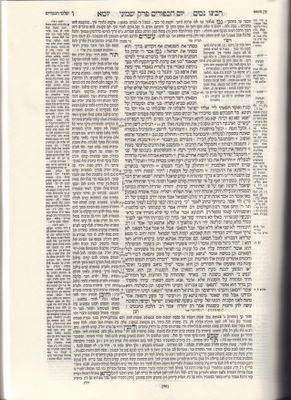
HIDE/SHOW IMAGE
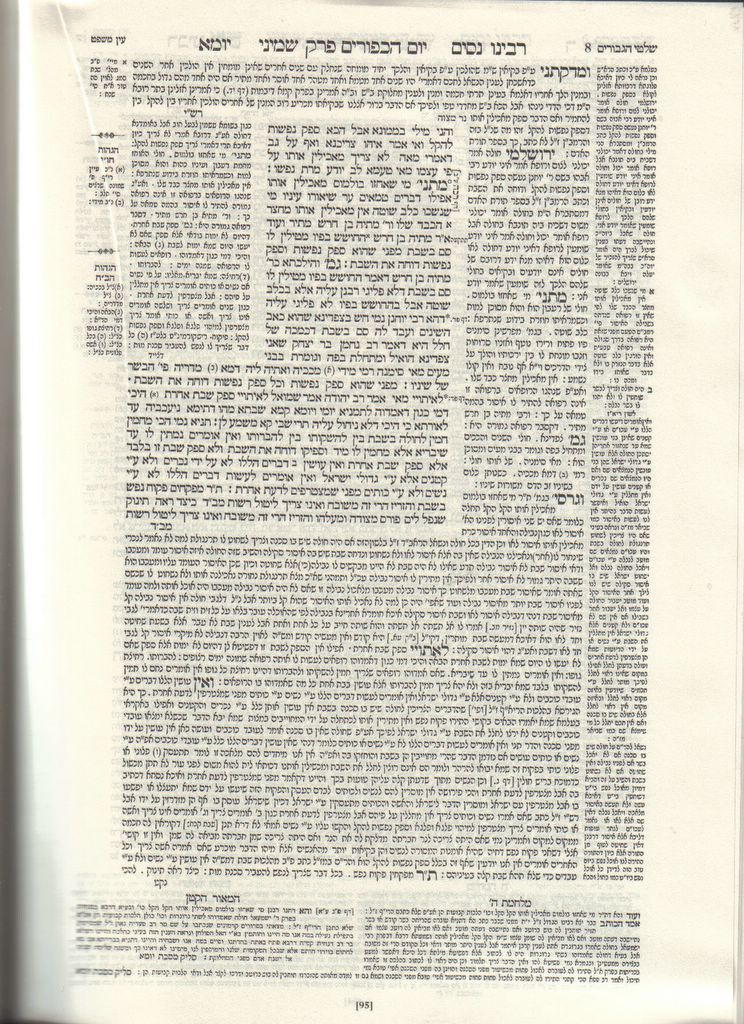
6b
{Yoma 87b}
They learnt there {tnan hatam}: At three periods during the year the kohanim lift their palms four times during the day - Shacharit, Musaf, Mincha, and Neilah {Shutting} of the Gates: Fast days, ma'amadot, and Yom Kippur.
What is Neilah of the Gates?
Rav said: An extra Shemoneh Esrei.
And Shmuel said: Mah Anu, Meh Chayeinu.
And the halacha is like Rav, for we say: Ullah was the shliach tzibbur before Rav Pappa {our gemara: Rava}. He begain with ata bechartanu {You have chosen us} and ended with mah anu, and he commended him. {thus this is not neilah}
Rav Acha son of Rava said: And an individual {rather than the shliach tzibbur} says it after his prayer.
Rav said: The prayer {Shemoneh Esrei} of Neilah exempts one from Maariv.
Rav is consistent, since he says that it {Neilah} is an extra Shemoneh Esrei, and once he has prayed {Shemoneh Esrei} he needs no further.
And now, the world is accustomed to pray Maariv after Neilah.
{Yoma 88a}
The Sages learnt {in a brayta}: If one experiences a seminal emission on Yom Kippur, he should descend and immerse, and during evening {erev} he should scrub.
At erev, do you think {he should do this}? Rather, say, and if during the evening he should scrub.
That is to say: if he experienced a seminal emission during the day, he descends and immerses and needs not scrub, for the semen is still moist and requires no scrubbing. Therefore he should not scrub. And if in the evening, which is the night of Yom Kippur, when he descends to immerse in the day, he should scrub the location upon which the semen fell, for it already dried on his flesh, and therefore it needs scrubbing.
They taught in the academy of Rabbi Yishmael: If one experienced a seminal emission on Yom Kippur, his sins are forgiven {mochalin} to him.
But they learnt {in a brayta}: his sins are sedurim. {organized}
{The answer:}
What is meant by organized? Organized to be forgiven.
A speaker of Tannaitic statements taught before Rav Nachman bar Yitzchak: One who experiences a seminal emmission on Yom Kippur should be concerned all year long. And if he survives that year, he is assured to be a {future} resident of the World to Come.
Rav Nachman bar Yitzchak said: Know this {is true}, for the entire world is hungry and he is satiated.
When Rav Dimi came {from Eretz Yisrael} he said {about one who experiences a seminal emmission on Yom Kippur}: he will live long and well {seeing children and grandchildren}.
HADRAN ALACH YOM HAKIPPURIM USLIKA LAH MASECHET YOMA
END PEREK EIGHT
Friday, September 01, 2006
Rif Yoma 6b {Yoma 87b - 88a}
Posted by
joshwaxman
at
11:00 AM
0
comments
Labels: yoma
Rif Yoma 6a {Yoma 85b continues; 87a-b}

HIDE/SHOW IMAGE
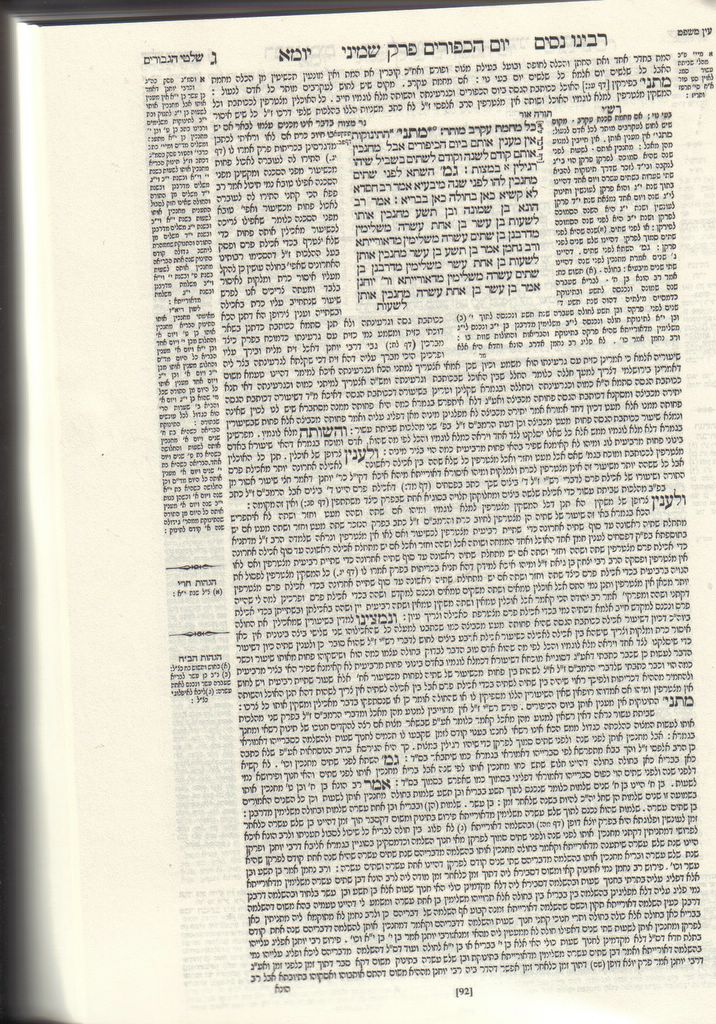
6a
{Yoma 85b continues}
Just as a mikveh cleanses {/purifies} the impure, so does Hashem cleanse Israel.
{Yoma 87a}
Gemara:
Rabbi Yitzchak said: He who has provoked his neighbor, even by words, must appease him, as it is written {Mishlei 6:1-3}:
if you have his money in your hand, open your palm and restore it to him; if not, increase upon him friends {=request some persons to pray him to forgive you}.
Rav Yehuda {our gemara: Rav Chisda} said: He must try to appease him three times, and among three circles of persons, as it is written {Iyyov 33:27}:
| כז יָשֹׁר, עַל-אֲנָשִׁים, וַיֹּאמֶר, חָטָאתִי וְיָשָׁר הֶעֱוֵיתִי; וְלֹא-שָׁוָה לִי. | 27 He cometh before men, and saith: 'I have sinned, and perverted that which was right, and it profited me not.' |
Rabbi Yossi bar Chanina said: When one tries to appease another, he need not try more than three times, as it is written {Bereishit 50:17}:
na occurring three times}
And this is specifically his friend, but his teacher, until he appeases him.
Twenty-four things hold back repentance, and these are they: rechilut {=talebearing}, lashon hara, one who is full of anger, one who has evil plans, one who befriends an evildoer, one who is accustomed to join a mean that is insufficient for its hosts, one who looks at sexual things, one who divides with a thief, one who says I will sin and return, one who seeks honor in the disgrace of his friend, one who separates from the community, one who denigrates his parents, one who denigrates his teachers, one who curses the public, one who holds back the community from fulfilling a precept, one who sways his friend from the good path to the evil path, one who makes use of the pledge of a pauper, one who accepts a bribe for the purpose of swaying others in judgement, one who finds a lost item and does not return it to its owner, one who sees his son going to a bad end and does not protest, one who eats from the theft from the poor, orphans, and widows, one who disagrees with the words of the Sages, one who suspects the righteous {choshed bekesherim}, one who hates rebuke, and one who mocks the precepts.
{Yoma 87b}
The Sages learnt {in a brayta}: The mitzvah of confession {viduy} on erev Yom Kippur is as it becomes dark. These are the words of Rabbi Meir. And the Sages say: He must confess before he eats and drinks, lest something happen to him at his meal {and he gets no chance to confess}. And although he confessed before he ate and drank, he needs to confess after he eats and drinks. And although he confessed at Maariv, he needs to confess in Shacharit, and confess during Musaf, Mincha, and Neilah. And where should he say it? An individual, after his prayer {=shemoneh esrei} and the shilach tzibbur {agent of the community} in the middle.
And what should he say?
Rav said: Ata Yodea Razei Olam {You know the mysteries of the world}
And Shmuel said: Ata Yodea BeImko shel Lev {You know the depths of the heart}
(Rabbi) Levi said: In your Torah it is written {Vayikra 16:30}:
Rav Yehuda said: For our transgressions are too numerous to count and our sins are too mighty to recount.
Rav Hamnuna said: {Elokai ad shelo notzarti=} My God, before I was created, I was unworthy, and now that I have been created, it as if I was not created. I am dust in my life - all the more so in my death. Behold I am before You like a vessel filled with embarrassment and shame. May it be the will before You that I should not sin further, etc...
Rav Hamdodi {our gemara: Mar Zutra} said: They only learned this in the instance in which he did not say Aval Chatanu {"But we have sinned..."} but if he said aval chatanu, it is not necessary.
And Rav {our gemara: bar} Hamdodi said: I was standing before Mar Shmuel and he was sitting. When the shliach tzibur reached Aval chatanu, he stood on his legs.
I said: We may derive from here that the primary confession is this {=aval chatanu}.
The Sages learnt {in a brayta}: How should he confess? aviti, pashati, chatati {whatever these specific terms for sin mean, based on the order it occurs in Tanach.}
And so too for the scapegoat sent out {to Azazel} it says {Vayikra 16:21}:
Bemidbar 14:18}:
chataah rather than vanakei, it is not in the pasuk, and this specific order of avon, pesha, chataah is what is being sought here. As Bach points out, the verse intended is likely Shemot 34:7
These are the words of Rabbi Meir.
And the Sages say: avonot -- these are the deliberate sins. And so it states {Bemidbar 15:31}:
pesha'im -- these are the rebellions. And so it states {II Kings 3:7}
II Kings 8:22}:
chata`im -- these are the accidental sins. And so does it state {Vayikra 4:2}:
chatati, aviti, pashati."
And so too David states {Tehillim 106:6}:
| ו חָטָאנוּ עִם-אֲבוֹתֵינוּ; הֶעֱוִינוּ הִרְשָׁעְנוּ. | 6 We have sinned with our fathers, we have done iniquitously, we have dealt wickedly. |
Daniel 9:5}:
Shemot 34:7:}
Moshe said before Hashem: Master of the Universe, when Israel sins and repents, transform for them the deliberate sins into accidental sins.
Rav Yehuda cited Rav: The halacha is like the Sages.
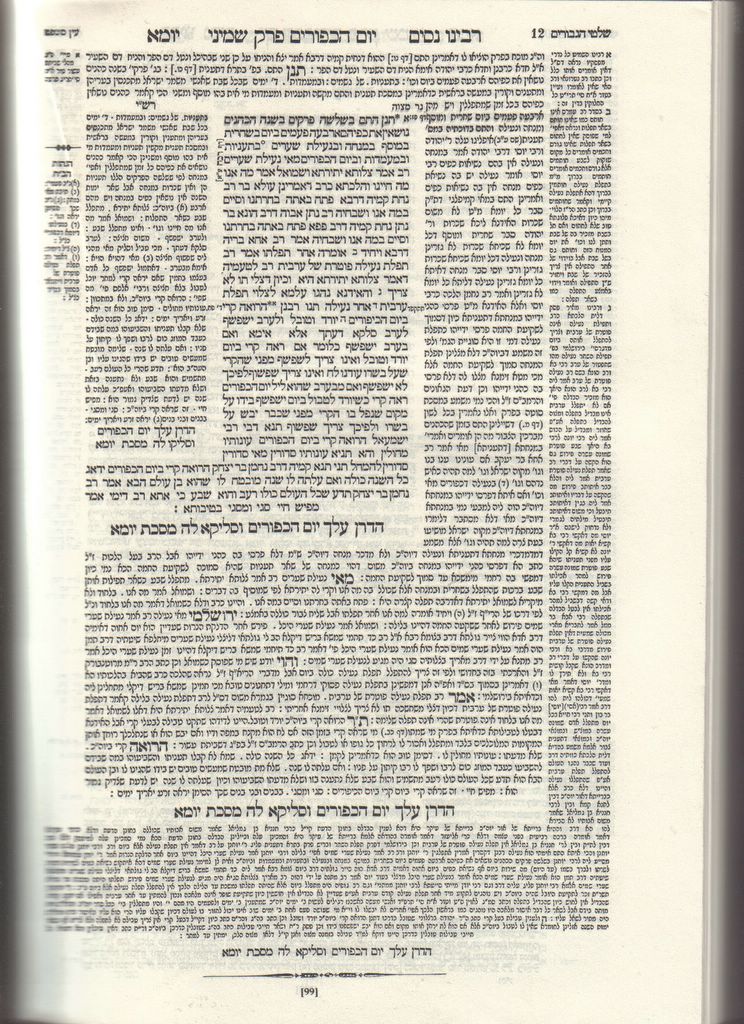
Posted by
joshwaxman
at
9:09 AM
0
comments
Labels: yoma
Wednesday, August 30, 2006
Rif Yoma 5b {Yoma 85a continues; 86b; Taanit 16a; Yoma 86b; 85b}

HIDE/SHOW IMAGE
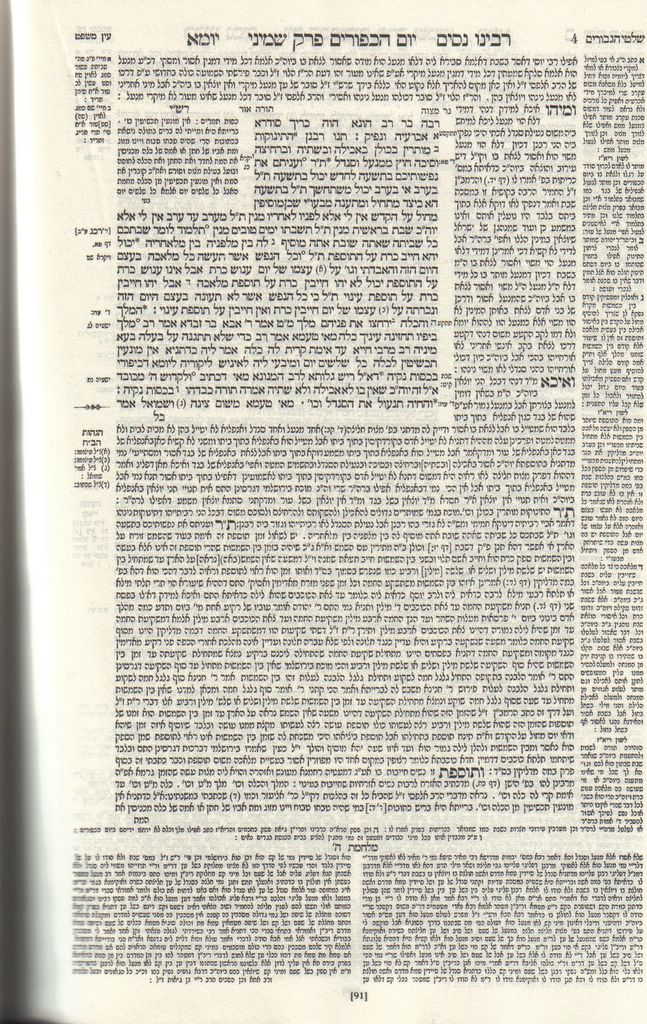
5b
{Yoma 85a continues}
But he who has on his conscience the defamation {profaning} of God {=chillul haShem}, neither penitence can suspend, nor Yom Kippur for, nor sufferings wipe out. But all the three only suspend, and death wipes out, as it is written {Yeshaya 22:14}:
Rav said: If one such as myself takes meat from the butcher, and does not immediately pay.
Rabbi Yochanan said: If one such as myself walks four cubits without Torah or tefillin.
Rav Nachman bar Yitzchak said: When people say of a man: "His Master should pardon him for his deeds."
Rav Yitzchak bar Rav Dimi said: When a man's companions are ashamed of his reputation. {see gemara for alternate girsa}
The Sages learnt {in a brayta}: When a man reads and learns {Torah}, attends to Torah scholars, speaks gently with other people, his buying and selling in the market are pleasant and his business dealing are conducted in a trustworthy fashion, what do the people say about him? Fortunate is Ploni who has learned Torah! Fortunate is his father and fortunate is his teacher who has taught him Torah! Woe to those people who do not learn Torah. Ploni learned Torah and you see how beautiful are his ways and how proper are his actions. Upon him Scriptures states {Yeshaya 49:3}:
| ג וַיֹּאמֶר לִי, עַבְדִּי-אָתָּה--יִשְׂרָאֵל, אֲשֶׁר-בְּךָ אֶתְפָּאָר. | 3 And He said unto me: 'Thou art My servant, Israel, in whom I will be glorified.' |
Rabbi Chama bar Chanina said: Repentance is great in that it brings healing to the world, as it is written {Yirmiyahu 3:22}:
because of your repentance}
Rabbi Levi said: Great is repentance, for it reaches the Throne of Glory. As is written {Hoshea 14:2}
| ב שׁוּבָה, יִשְׂרָאֵל, עַד, ה אֱלֹקֶיךָ: כִּי כָשַׁלְתָּ, בַּעֲוֹנֶךָ. | 2 Return, O Israel, unto the LORD thy God; for thou hast stumbled in thine iniquity. |
{Yoma 86b}
What is a baal teshuva {a penitant man}?
Such that a sin comes to his hand and he separates himself from it.
Rav Yehuda adds: With the same place, the same time, and the same woman.
Rav yehuda said: Rav would contrast {verses}.
It is written {Mishlei 28:13}:
| יג מְכַסֶּה פְשָׁעָיו, לֹא יַצְלִיחַ; וּמוֹדֶה וְעֹזֵב יְרֻחָם. | 13 He that covereth his transgressions shall not prosper; but whoso confesseth and forsaketh them shall obtain mercy. |
| א לְדָוִד, מַשְׂכִּיל: אַשְׁרֵי נְשׂוּי-פֶּשַׁע; כְּסוּי חֲטָאָה. | 1 [A Psalm] of David. Maschil. Happy is he whose transgression is forgiven, whose sin is pardoned. |
This is no contradiction. Here refers to sins between man and God while there it refers to sins between man and his fellow.
They learnt {in a brayta}: If one commits a sin one time he is forgiven; twice, he is forgiven; three times, he is not forgiven. For it is stated {Iyyov 33:29}:
| כט הֶן-כָּל-אֵלֶּה, יִפְעַל-אֵל-- פַּעֲמַיִם שָׁלוֹשׁ עִם-גָּבֶר. | 29 Lo, all these things doth God work, twice, yea thrice, with a man, |
This is no question. Here is individually, and here is in public.
And we learn in perek seder taaniyot {Taanit 16a}:
The Sages learnt {in a brayta}: If a man has a transgression in hand and confesses, and returns to it, to what is he compared? To a man who grabs a sheretz {source of ritual impurity} in hand, even if he immerses in all the waters of the world his immersion does not count for him. If he throws it from his hand, immediately his immersion counts for him. For it is written {Mishlei 28:13}
| יג מְכַסֶּה פְשָׁעָיו, לֹא יַצְלִיחַ; וּמוֹדֶה וְעֹזֵב יְרֻחָם. | 13 He that covereth his transgressions shall not prosper; but whoso confesseth and forsaketh them shall obtain mercy. |
| מא נִשָּׂא לְבָבֵנוּ אֶל-כַּפָּיִם, אֶל-אֵל בַּשָּׁמָיִם. | 41 Let us lift up our heart with our hands unto God in the heavens. |
| יא כְּכֶלֶב, שָׁב עַל-קֵאוֹ-- כְּסִיל, שׁוֹנֶה בְאִוַּלְתּוֹ. | 11 As a dog that returneth to his vomit, so is a fool that repeateth his folly. |
Rabbi Eliezer ben Yaakov says: All the more is he praiseworthy, for it is written {Tehillim 51:5}:
| ה כִּי-פְשָׁעַי, אֲנִי אֵדָע; וְחַטָּאתִי נֶגְדִּי תָמִיד. | 5 For I know my transgressions; and my sin is ever before me. |
For Rav Huna said: Once one commits a sin and repeats it, it is permitted to him. It is permitted to him, do you truly think?! Rather, say, it seems to him like something permitted.
And he needs to delineate the sin. For it is written {Shemot 32:31}:
Rabbi Akiva says: He need not.
Rather, to what will I apply וַיַּעֲשׂוּ לָהֶם, אֱלֹהֵי זָהָב - "and have made them a god of gold?" Like Rabbi Yannai. For Rabbi Yannai said: Moshe said before Hashem: Master of the World! Because of the silver and gold that you showered upon Israel until they said "Enough!" caused them to make a god of gold.
{Yoma 86b}
We expose the hypocrites because of chillul hashem {profaning God's name} for it is written Yechezkel 3:20:
{Yoma 87a}
Anyone who causes the public to merit to do mitzvot, he will not be able to come to a sin {for Hashem will push away the chance of sinning so that he does not come to do it} so that it will not be that his students inherit the World to Come and he descends to Sheol {the underworld}. For it is written {Tehillim 16:10}:
| י כִּי, לֹא-תַעֲזֹב נַפְשִׁי לִשְׁאוֹל; לֹא-תִתֵּן חֲסִידְךָ, לִרְאוֹת שָׁחַת. | 10 For Thou wilt not abandon my soul to the nether-world; neither wilt Thou suffer Thy godly one to see the pit. |
| יז אָדָם, עָשֻׁק בְּדַם-נָפֶשׁ-- עַד-בּוֹר יָנוּס, אַל-יִתְמְכוּ-בוֹ. | 17 A man that is laden with the blood of any person shall hasten his steps unto the pit; none will support him. |
Mishna:
To him who says: "I will sin, repent, sin again, and repent again," is not given the opportunity to repent.
For him who thinks, "I will sin; Yom Kippur will atone for my sins," Yom Kippur does not atone.
A sin towards God, Yom Kippur atones for; but a sin towards his fellowman is not atoned for by Yom Kippur so long as the wronged fellowman is not righted.
Upon ths Rabbi Eleazer ben Azariah interpreted {/lectured} the following {Vayikra 16:30}:
{the derasha takes "before the LORD" to refer to sins between man and God as opposed to sins between man and man.}
Rabbi Akiva said: Fortunate are you, O Israel! Before Whom are you cleansed, and Who cleanses you? Your Father in Heaven cleanses you, for it is stated {Yechezkel 36:25}:
Yirmiyahu 17:13}:
mikvei to be ritual cleansing bath rather than hope}
Just as a mikveh cleanses {purifies}
Posted by
joshwaxman
at
9:21 AM
0
comments
Labels: yoma
Tuesday, August 29, 2006
Rif Yoma 5a {Yoma 84b continues; 85a}

HIDE/SHOW IMAGE
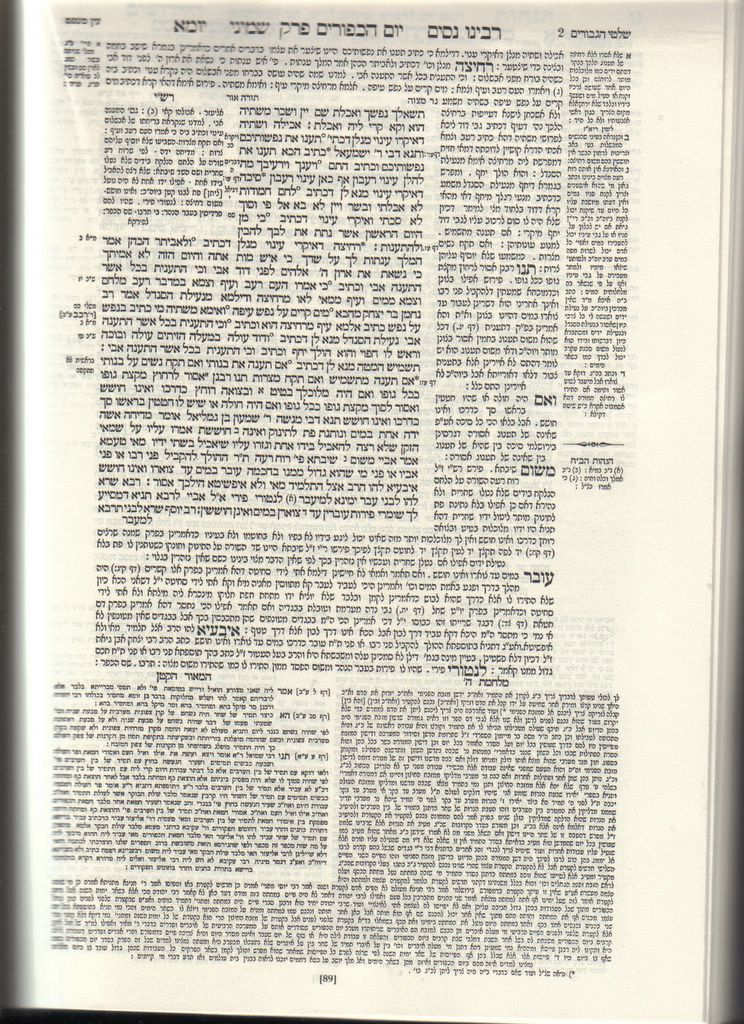
5a
{Yoma 84b continues}
And even though he takes up fish together with him {the child}.
If one has seen a child fall into a pit, he may remove a piece of earth {to save him the sooner} and with more alacrity this is done, the greater the praise. And he need not take permission from Bet Din. And even though he creates a staircase in the earth.
If he saw a child enter, behind which the door got locked, he should break open the door immediately, and the sooner the better; and he need not take permission from Bet Din, even when by this means he breaks it for kindling.
We extinguish and isolate the fire {on Shabbat} and the sooner one does this, the more praiseworthy one is; and no permission from Beth Din is to be taken for it, and even when the coals he saves from consumption will be used by him later for roasting meat.
And it is needed. For it is has told of of the case of the sea, there it is because if he does not take him out he will die; but by a pit, it is possible to sit at the mouth of the pit and take his mind off the situation with nuts. Thus we need it.
And if it had told us of the pit, this is because he is frightened, but by a door, it is possible that he would sit on the other side and take his mind off the situation with nuts. Thus it is needed.
"We extinguish and isolate the fire" - why do we need this? Rabbi Eleazar said: this is required to tell us {even} to another courtyard. {read on to understand}
Rav Yosef cited Rav Yehuda who cited Shmuel: In case of danger to life, we do not follow the majority.
How so?
If you say that if you have 9 Israelites and one idolator - and thus we have a majority of Israelites, or if we have 1/2 and 1/2 - we go in cases of doubt to life leniently. Rather, that there are 9 idolators and 1 Israelite -- this is also obvious, for it is a case of kavua {established} and anything established is like 1/2 and 1/2. Rather, it is needed for the case where one left the group and went to another courtyard, and a fire broke out there. I would have thought to say that anything that separates, we assume it separated from the majority, and thus we do not attempt to save the life. Therefore it informs us that we do not follow the majority in cases of danger to life.
Is this really so? But Rabbi Assi cited Rabbi Yochanan that even 9 idolators and 1 Israelite -- in that same courtyard we save but in another courtyard we do not!
This is no contradiction - this is where they all left, and this is where they only a portion left.
Mishna:
If a building tumble down, and it is doubtful whether anyone is buried beneath the ruins or not; if it is doubtful whether he be dead or alive, it is permitted to remove the ruins from above him on the Sabbath. If he be found alive, the ruins are to be entirely removed; but should he be dead, he is to be left there.
{Yoma 85a}
Gemara:
"If he be found alive, we save him":
This is obvious! No. It is needed to teach us that we do this even for chayei sha'a {to extend his life even though he wll die soon anyway}.
The Sages learnt {in a brayta}:
Until where does he inspect {to see whether the person is alive}? Until his torso. And some say until his nose.
If they inspected and saw that his upper parts and found them defunct, we do not say that his lower parts are also defunct.
There was an incident in which the upper parts defunct and the lower parts alive.
Rav Pappa said: The dispute is from lower to upper, but from upper to lower, once he inspected him until his nose, he need not inspect further, for it is written {Bereishit 7:22}:
And how do we know that saving a life supersedes Shabbat? כב כֹּל אֲשֶׁר נִשְׁמַת-רוּחַ חַיִּים בְּאַפָּיו, מִכֹּל אֲשֶׁר בֶּחָרָבָה--מֵתוּ. 22 all in whose nostrils was the breath of the spirit of life, whatsoever was in the dry land, died.
Rav Yehuda cited Shmuel: The verse states {Vayikra 18:5}
Mishna:
Sin-offerings {chatat} and trespass-offerings {asham} atone. Death and Yom Kippur, if one is penitent, atone. Penitence atones for slight breaches of positive or negative commandments; for grave sins, it effects a suspension, till Yom Kippur completes the atonement.
Gemara:
"Penitence atones for slight breaches of positive or negative commandments": Now that you have stated negative commandments, need one say positive commandments?
Rav Yehuda said: This is what it means to say: On positive commandments and on negative commandments inferred from positive commandments.
Rabbi Matia ben Cheresh asked Rabbi Eleazar ben Azarya in Rome: Have you heard of the four differences made in atonements, about which Rabbi Yishmael lectured?
He replied to him: There are only three, and penitence is combined with each:
When one has transgressed a positive commandment, and done penance, he is atoned for before he goes away from his place {that is, immediately}, as it is written {Yirmiyahu 3:22}:
If he has transgressed a negative commandment, penitence suspends (the sentence), and Yom Kippur atones, as is written {Vayikra 16:30}:
karet, or death by Beth Din, then penitence and Yom Kippur suspend {the sentence in Heaven} and afflictions wipe it out, as is written {Tehillim 89:33}:
Posted by
joshwaxman
at
8:20 AM
0
comments
Labels: yoma
Monday, August 28, 2006
Rif Yoma 4b {Yoma 83a continues; 84a-84b}

HIDE/SHOW IMAGE
4b
{Yoma 83a continues}
And these words {that we follow the majority of opinions} is in terms of money, but here, in case of danger to life we rule leniently. And if he himself states "I need it," even though 100 say he does not need it, we feed him based on his own opinion. What is the reason? לֵב--יוֹדֵעַ, מָרַּת נַפְשׁוֹ -- "The heart knoweth its own bitterness."
Mishna:
If a man is seized with bulimy {=a disease in which there is a perpetual and insatiable appetite for food; a diseased and voracious appetite}, he may be fed even with unclean food, till his eyes become clear.
One who is bitten by a mad dog may not have the dog's midriff above the liver given to him.
And Rabbi Matia ben Cheresh permits.
And Rabbi Matia ben Cheresh said further: If a person has a sore throat, it is permitted to put drugs into his throat on Shabbat, because the disease may endanger his life, and whatsoever threatens to endanger life supersedes Shabbat.
Gemara:
And the halacha is like Rabbi Matia ben Cheresh where he said that if a person has a sore throat, it is permitted to put drugs into his throat on Shabbat, for the Sages do not argue on him except regarding the mad dog, but regarding one who has a sore throat, they do not argue on him.
{Yoma 84a}
For Rabbi Yochanan also became sick with tdafdina - which is an ache in the teeth - and he made for it a drug on Shabbat - for it is like an internal wound, for Rav Nachman bar Yitzchak said: tzafdina is different, since it begins in the mouth and ends in the intestines.
What are its symptoms? When something is put on the teeth his dadrei begin to bleed.
To explain {dadrei}: the flesh of the teeth {=gums}.
"Because it is a doubt of danger to life and any doubt of danger to life supercedes Shabbat":
To include what?
Rav Yehuda cited Shmuel: To include doubt of another Shabbat.
How so?
Such as they estimate that the cure will take 8 days, and the first day is Shabbat. I would have said that we should delay until night {=matzaei Shabbat} such that we do not desecrate for him two Shabbat. Therefore it informs us.
A brayta also says so. We heat water for a sick person on Shabbat, whether to give him to drink or to aid in his recovery. And we do not say to wait for him until he strengthens but rather we heat for him immediately. And his doubt supercedes Shabbat. And not only doubt for this Shabbat but also doubt for the another Shabbat. And we do not do these things via gentiles or minors, but rather by adult Jews {gedolei yisrael}. And we do not say to do these things, not via women nor via Cutheans or Cutheans {who hold there is no problem of Lifnei Iver}, for they join to another opinion {in terms of pikuach nefesh}.
{Yoma 84b}
The Sages learnt {in a brayta}: We save a life on Shabbat, and with more alacrity this is done, the greater the praise. And he need not take permission from Bet Din.
How so?
If he saw a child fall into the sea, he may spread out a net, and take him up, and with more alacrity this is done, the greater the praise. And he need not take permission from Bet Din.
Posted by
joshwaxman
at
11:42 AM
0
comments
Labels: yoma
Rif Yoma 4a {Yoma 82a continues; 82b-83a}

HIDE/SHOW IMAGE
4a
{Yoma 82a continues}
If you have a man whose body is more important to him than his money, therefore it is stated בְכָל-נַפְשְׁךָ. And if you have a man whose money is more important to him than his body, therefore it is stated בְכָל-מְאֹדֶךָ.
Sexual sins {that one des not violate them because of danger to life} how do I know?
For they learnt {in a brayta}: Rabbi said: {Devarim 22:26}:
{Yoma 82b}
Bloodshed - it is logic. Like he who came before Rava. He said to him {Rava}: The ruler of my neighborhood told me, "kill Ploni and if not, I will kill you." He {=Rava} said to him: Let yourself be killed and do not kill him. Who says that your blood is redder? Perhaps your fellow's blood is redder.
A certain pregnant woman smelled {a smell on Yom Kippur and desired food}. They came before Rabbi {to inquire what to do}. He said to them, "Go and whisper in her ear that now is Yom Kippur." They whispered to her and she quieted down {and the infant inside her did not desire the food}. They called upon him {=the infant} the verse {Yirmiyahu 1:5}:
A certain pregnant woman smelled {a smell on Yom Kippur and desired food}. They came before Rabbi Chanina. He said to whisper to her. They whispered to her and she did not quiet down. They called upon him {=the infant} the verse {Tehillim 58:4}
{Yoma 83a}
| ד זֹרוּ רְשָׁעִים מֵרָחֶם; תָּעוּ מִבֶּטֶן, דֹּבְרֵי כָזָב. | 4 The wicked are estranged from the womb; the speakers of lies go astray as soon as they are born. |
"A sick person, they feed him based on medical experts":
They said in the academy of Rabbi Yannai: If the sick person says "I need" and the doctor says he does not need, we listen to the sick person.
This is obvious! In case of danger to life we rule leniently! I would have said that when the sick person says "I need," he is merely expressing his fears, and he thinks "If I do not eat I will die." Therefore it informs us that {Mishlei 14:10}:
| י לֵב--יוֹדֵעַ, מָרַּת נַפְשׁוֹ; וּבְשִׂמְחָתוֹ, לֹא-יִתְעָרַב זָר. | 10 The heart knoweth its own bitterness; and with its joy no stranger can intermeddle. |
This is obvious! In case of danger to life we rule leniently! I would have said that לֵב--יוֹדֵעַ, מָרַּת נַפְשׁוֹ -- "the heart knoweth its own bitterness." Therefore it informs us that we listen to the doctor. And this that the sick person said "I do not need," this is a stupor that has seized him {because of his sickness}.
{My explanation of the following in curly braces:}
And even if he {the patient} and another {= a doctor} in accordance with him say that he does not need, and another two {doctors} say that he does need, we feel him on their basis. Even though we say that two are like one hundred and one hundred are like two, this is in terms of testimony, but in terms of estimation, we go after the majority of opinions.
Posted by
joshwaxman
at
7:09 AM
0
comments
Labels: yoma
Rif Yoma 3b {Yoma 82a continues}

HIDE/SHOW IMAGE
3b
{Yoma 82a continues}
A twelve year-old female, she finishes {the fast} Biblically, and a thirteen year old male finishes the fast Biblically.
Even though we establish like Rabbi Yochanan who said that 12 year old girls and 13 year old boys finish the fast Biblically, we {also} establish like Rav Huna and Rav Nachman,for they are later, that they finish Rabbinically in order to accustom them {lechanchan} from 11 years old, whether for a boy or a girl, and a nine and ten year old, we accustom them for hours, like Rav Nachman - that if he regularly ate at two hours {into the day}, we feed him at three; at three, we feed him at four.
Mishna:
A pregnant woman, who longs for food which she smells, should be fed until relieved.
An invalid is fed by the direction of persons possessing medical knowledge; if there be none such, he is to be fed at his own desire, till he says, "Enough."
Gemara:
The Sages learnt {in a brayta}: If a pregnant woman has smelled sacred meat, or pork, something should be dipped in the sauce thereof, and presented to her mouth. If she is relieved thereby, it is good; otherwise, the sauce must be given to her. If this has not satisfied her either, the meat itself must be given to her. Because nothing is prohibited which is needed to save a life, except idolatry, sexual sins, and bloodshed.
How do we know this? For they learnt {in a brayta}: Rabbi Eleazar said:
{In the beginning of Shema - Devarim 6:5:
| ה וְאָהַבְתָּ, אֵת ה אֱלֹהֶיךָ, בְּכָל-לְבָבְךָ וּבְכָל-נַפְשְׁךָ, וּבְכָל-מְאֹדֶךָ. | 5 And thou shalt love the LORD thy God with all thy heart, and with all thy soul, and with all thy might. |
If it is stated בְכָל-נַפְשְׁךָ - "with all thy soul", why is it stated וּבְכָל-מְאֹדֶךָ - "and with all thy might?" And if it is stated וּבְכָל-מְאֹדֶךָ - "and with all thy might, why it is stated בְכָל-נַפְשְׁךָ - "with all thy soul?"
Posted by
joshwaxman
at
7:07 AM
0
comments
Labels: yoma
Wednesday, August 23, 2006
Rif Yoma 3a {Yoma 78b continues; 82a}

HIDE/SHOW IMAGE
3a
{Yoma 78b continues}
Anything which is because of scorpions is permitted.
{Yoma 82a}
Mishna:
Children are not made to fast on the Day of Atonement, but when one or two years {before they become obligated} they are accustomed {mechanchin} to do it, so that they become habituated to obey the religious commandments.
Gemara:
Now that we have been informed that two years before they are accustomed {mechanchin} to do it, "a year before" do we need?
Rav Chisda said: This is no question. Here is by a sick person, and here is by a healthy person.
Rav Huna said: An eight year old and a nine year old, you accustom him {to fast} for hours. A ten year old and an eleven year old, they finish {the fast} Rabbinically. A twelve year old, they finish the fast Biblically.
And Rav Nachman said: A nine year old and a ten year old, you accustom him {to fast} for hours. An eleven year old, he they finish the fast Rabbinically. A twelve year old, they finish the fast Biblically.
And Rabbi Yochanan said: A ten year old and an eleven year old, you accustom him {to fast} for hours.
Posted by
joshwaxman
at
8:22 AM
0
comments
Labels: yoma
Rif Yoma 2b {Yoma 78b continues; 81b; 81a; 78b; Shabbat 119b; Yoma 78b}

HIDE/SHOW IMAGE
2b
{Yoma 78b continues}
Rabba bar Rav Huna would fold a cloth on his feet and go out.
The Sages learnt {in a brayta}: Children are permitted in all of them - in eating, drinking, washing, and annointing, except for wearing shoes and sandals.
{Yoma 81b}
{Recall that Yom Kippur is on the tenth of Tishrei. For reference, see Vayikra 23:7. But the 9th is mentioned later, is verse 32
The Sages learnt {in a brayta}: {Vayikra 23:32}:
erev, perhaps this means once it becomes dark? Therefore it teaches us בְּתִשְׁעָה {and since days in the Jewish calendar start at night, it would have said "in the tenth day"}. How so? He begins fasting while it is yet day {on the 9th} for we add from the profane to the holy. This only teaches me beforehand {that one adds}. Afterwards, from where? Therefore it teaches מֵעֶרֶב עַד-עֶרֶב - "from even unto even." This only teaches me Yom Kippur. A regular Shabbat, from where? Therefore it teaches תִּשְׁבְּתוּ. Yom Tov from where? Therefore it teaches שַׁבַּתְּכֶם - Any resting which you rest, you add to it both before and after it.
{Yoma 81a}
Perhaps one would be liable to karet on this addition? Therefore it teaches {Vayikra 23:30}
be'etzem}
on the actual {etzem} day there is the penalty of karet but there is no penalty of karet on the addition.
Perhaps there is no penalty of karet on the addition in terms of work {since pasuk 30} was all the gemara cited} but there is penalty of karet on the addition in terms of affliction. Therefore it teaches {pasuk 29}:
| כט כִּי כָל-הַנֶּפֶשׁ אֲשֶׁר לֹא-תְעֻנֶּה, בְּעֶצֶם הַיּוֹם הַזֶּה--וְנִכְרְתָה, מֵעַמֶּיהָ. | 29 For whatsoever soul it be that shall not be afflicted in that same day, he shall be cut off from his people. |
{Yoma 78b}
"The king and the bride wash their faces":
A king, what is the reason?
Rav Abba bar Zavda cited Rav: {Yeshaya 33:17}:
| יז מֶלֶךְ בְּיָפְיוֹ, תֶּחֱזֶינָה עֵינֶיךָ; תִּרְאֶינָה, אֶרֶץ מַרְחַקִּים. | 17 Thine eyes shall see the king in his beauty; they shall behold a land stretching afar. |
Rav said: So that she should not become disgusting to her husband.
Rav inquired of Rabbi Chiyya: Until when is she considered a bride? He said to him: Like this that we learned {in a brayta}: We do not withhold tachshitin {ornaments} from the bride all thirty days.
{Shabbat 119b}
And one is required to honor Yom Kippur with clean clothing, for the Exilarch said to Rav Hamnuna: What is implied by {Yeshaya 58:13}:
He said to him: This refers to Yom Kippur, which has no eating or drinking. The Torah teaches to honor it with clean clothing.
{Yoma 78b}
"And the woman who just gave birth may wear sandals ..."
What is the reason? Because of the cold.
And Shmuel said:
Posted by
joshwaxman
at
8:21 AM
0
comments
Labels: yoma
Tuesday, August 22, 2006
Rif Yoma 2a {Yoma 77b continues ... 78b}

HIDE/SHOW IMAGE
2a
{Yoma 77b continues}
to enter {the water} to come to the lecture, and to return.
Abaye said to him: Now coming, the performed a mitzvah. To return, what mitzvah are they performing?
He said to him: So that they do not stumble in the future. For if we did not permit them to return to their homes, they would not come for the mitzvah.
Rav Yehuda and Rav Shmuel bar Yehuda {Bach: bar Rav} were standing on the bank of the Papa river {our gemara: emend to Nehar Perat = Euphrates} at the passage to Chatzdad. And Rami bar Papa was on the other side. He raised his voice and said: May one cross {the river, getting wet} to come before the Rabbis {Rav Yehuda and Rav Shmuel bar Yehuda} to ask a halachic question?
Rav Yehuda said: Rav and Shmuel both say that one may cross, provided that one does not draw away one's hands from the skirts of one's robe.
Some say {another version}:
Rav Yehuda and Rav Shmuel bar Yehuda {Bach: bar Rav}: we learnt it {in a brayta}: provided that one does not draw away one's hands from the skirts of one's robe.
{Yoma 78a}
This is fine on Yom Kippur, when he does not have shoes on his feet, he can cross in water. On Shabbat, where there are shoes {and he might come to carry them}, what is there to say?
Rabbi Nechemia the in-law of the house of the Nasi said: I saw Rabbi Ami and Rabbi Assi who crossed while wearing their shoes.
This is fine in terms of shoes. Sandals, what? And we conclude that sandals, lechatchila {ab initio} not.
Rav Yehuda {our gemara: Yehuda bar Gerogros} taught: It is forbidden to sit on clay {our gemara: on mud} on Yom Kippur.
Rabbi Yehoshua ben Levi said: This is speaking of moist clay {/mud}.
Abaye said: And it was moist enough to make someone else wet.
Rav Yehuda said: It is permitted to cool off with fruits.
Rav Yehuda would cool off with a gourd.
Rabba would cool off with a baby.
Rava would cool off with a silver cup.
Rava said: A full silver cup is fobidden. Partly full is permitted. One of earthenware, whether full or partly full is forbidden. What is the reason? It exudes {water from within}.
Rav Ashi said: Even a partially full silver cup is forbidden. What is the reason? He will come to azdarbuyei.
To explain: lets he shake it and the water within sprinkles on his flesh.
Zeira bar Chama the innkeeper of Rabbi Yehoshua ben Levi, of Rabbi Ami, of Rabbi Assi, and of the Rabbis of Caesarea said to Yosef the son of Rabbi Yehoshua ben Levi: Son who has learned much Torah {our gemara: Son of the lion}, come and I will tell you an excellent thing that your father did. Erev Tish'a beAv, they would bring him a cloth, and he would soak in water, and he would use it to wipe his face, hands and feet. The next day {=the 9th of Av} he would pass it over his eyes without concern. On erev Yom Kippur he would soak it in water and make it like dried vessels {/clothing = he would let it dry overnight}. The next day {=Yom Kippur} he would pass it over his eyes without concern.
And so too, when Rabba bar Mari came {from Eretz Yisrael}, he said: Rabbi Yehoshua ben Levi had a cloth. On erev Yom Kippur he would soak it in water and then made it like dried vessels {=he let it dry overnight}. The next day he would pass it over his eyed without concern.
And we conclude {that the version is different and} that on erev tish'a beAv he would soak it and make it like dried vessels, and on erev Yom Kippur he would wipe his {wet} hands and feet and on the next day would pass it over his eyes without concern, but he would not soak it in water initially, for concern for squeezing out when he passed it over his eyes.
And so is the halacha.
{Yoma 78b}
It was a question to them: May one go out with rubber sandals on Yom Kippur?
Rabbi Yitzchak bar Nachmani stood on his feet and declared: I saw Rabbi Yehoshua ben Levi go out with rubber sandals on Yom Kippur. I said to him: On a {regular} public fast day, what? He said to me: there is no difference.
Rabba bar bar Chana said: I saw Rabbi Eleazar go out on a public fast day with rubber sandals. I said to him: On Yom Kippur, what? He said to me: there is no difference.
Rav Yehuda would go out with dehitnei. {Rashi: a kind of rubber}
Abaye would go out with dehutzei. {Rashi: and sandal of palm fronds}
Rava would go out with divlei. {something of a thick viscous mass?}
Posted by
joshwaxman
at
9:29 AM
0
comments
Labels: yoma
Monday, August 21, 2006
Rif Yoma 1b {Yoma 76a continues; 74b; 76b-77b}

HIDE/SHOW IMAGE
1b
{Yoma 76a continues}
How do we know that {refraining from} eating and drinking is called an affliction?
For it is written {Vayikra 16:29}:
And they learnt in the academy of Rabbi Yishmael: It is written here {Vayikra 16:29}:
Devarim 8:3}:
{Yoma 76b}
How do we know that {withholding} annointing is called affliction? For it is written {Daniel 10:3}
lehit'anot is taken to refer to affliction}
{Yoma 77a}
How do we know that {refraining from} washing is called an affliction?
For it is written {I Kings 2:26}:
II Shmuel 17:29}
Hungry from {not eating} bread, thirsty from {not drinking water}. Faint from what? Is it not from {lack of} washing?
And perhaps it is from {not} wearing sandals?
Rav Nachman bar Yitzchak said: From here {can we show that it means washing rather than wearing sandals}: {Mishlei 25:25}
| כה מַיִם קָרִים, עַל-נֶפֶשׁ עֲיֵפָה; וּשְׁמוּעָה טוֹבָה, מֵאֶרֶץ מֶרְחָק. | 25 As cold waters to a faint soul, so is good news from a far country. |
{One might add that napishtu means neck in Akkadian and this is its basic meaning in Biblical Hebrew, so it states "on the neck" rather than "in the neck."}
Therefore it means faint from {not} washing.
And it is written {as we stated above in I Kings} - וְכִי הִתְעַנִּיתָ, בְּכֹל אֲשֶׁר-הִתְעַנָּה אָבִי.
How do we know wearing of sandals?
For it is written {II Shmuel 16:30}
How do we know {refraining from} sexual relations?
For it is written {Bereishit 31:50}:
וְאִם-תִּקַּח נָשִׁים עַל-בְּנֹתַי - refers to taking other women as additional wifes.
{Yoma 77b}
The Sages learnt {in a brayta}: It is forbidden to wash {on Yom Kippur} a small portion of his body, the same as his entire body. And if he is soiled by clay or by dung, he should wash normally and not be concerned. And it is forbidden to annoint {on Yom Kippur} a small portion of his body, the same as his entire body. And if he was ill or has scabs on his head, he may annoint normally and not be concerned.
Thet taught in the academy of Menashe: Rabban Shimon ben Gamliel says: A woman may wash one hand in water and give bread to a child without concern.
They said regarding Shammai the elder that he did not wish to feed with one hand, and they decreed upon him that he should feed with both hands.
What is the reason? Abaye said: Because of the Shivsa.
To explain, an evil spirit.
The Sages learnt {in a brayta}: One who goes to greet his teacher or father, or he who is greater than him in wisdom may enter water until his neck and need not be concerned.
It was a question to them: A teacher to his student, what? And it was not resolved. Therefore it is forbidden.
Rava permitted the residents of Avar Yemina to enter {water} to protect their fruit.
Abaye said to Rava: There is a brayta which supports you: watchers of fruit may enter until their necks into water without concern.
Rav Yosef permitted the residents of Tarba
Posted by
joshwaxman
at
8:06 AM
0
comments
Labels: yoma